


The most inviting luxury interiors are often built upon a foundation of cold, uncompromising materials. It's a design paradox that defines the modern atelier. While you likely admire the structural integrity of raw steel and aged timber, the fear of creating a space that feels sterile or unyielding often stalls the creative process. Learning how to style industrial furniture requires more than just placing a metal coffee table in a room. It demands a precise understanding of textural alchemy and architectural balance.
We recognise the challenge of integrating bold, aviation-inspired pieces into a refined domestic setting without sacrificing elegance. You desire a home that feels curated and unique, far removed from the repetitive nature of mass-market decor. This guide offers a definitive roadmap for mastering the transition from raw concept to a sophisticated, lived-in reality. We'll examine the techniques for softening metallic edges with sumptuous leathers and bouclé fabrics, ensuring your environment remains a testament to both high-end design and absolute comfort.
Key Takeaways
- Understand the evolution from warehouse aesthetics to architectural curation by blending raw structural elements with bespoke, high-end comforts.
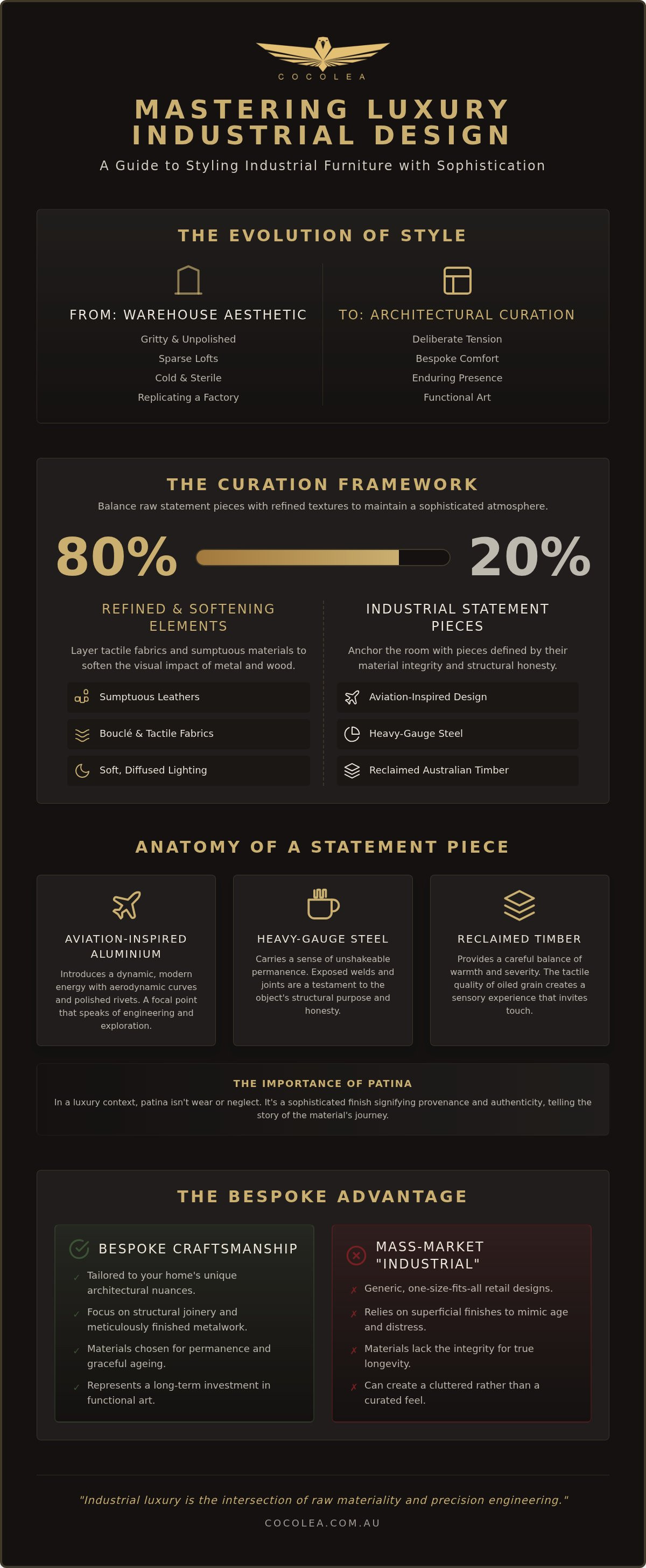
- Master how to style industrial furniture using the 80/20 rule, balancing raw statement pieces with refined textures to maintain a sophisticated atmosphere.
- Recognise the value of patina and aviation-grade materials as indicators of bespoke craftsmanship rather than simple industrial wear.
- Discover how to soften the visual impact of heavy-gauge steel and reclaimed timber through the intentional layering of tactile fabrics.
- Learn the benefits of commissioning bespoke pieces to ensure your industrial furniture aligns perfectly with your home's unique spatial requirements.
Beyond the Warehouse: Redefining Luxury Industrial Style
The concept of the Industrial style has undergone a profound metamorphosis. It's no longer confined to the gritty, unpolished aesthetics of 19th-century factory floors or the sparse lofts of the early nineties. Today, we're seeing a distinct shift within Australian homes from "warehouse living" to a more refined "architectural curation." This evolution prioritises a deliberate tension between raw structural elements and bespoke comfort. When considering how to style industrial furniture, the goal isn't to recreate a cold gallery. Instead, it's about selecting pieces that command attention through their material integrity and historical resonance.
True luxury industrial design centres on the concept of "Enduring Presence." This philosophy suggests that a piece of furniture shouldn't just occupy space; it should anchor it. High-end materials like aviation-grade aluminium and heavy-gauge steel aren't chosen for their novelty. They're selected because they possess a permanence that mass-market alternatives lack. These materials age gracefully, developing a story through use, which is the hallmark of a genuine statement piece. Longevity is the true currency of luxury, and it begins with the selection of materials that refuse to compromise.
The Core Philosophy: Purpose Over Ornamentation
The foundation of this aesthetic lies in the Bauhaus-inspired principle where form follows function. There's an inherent beauty in the mechanics of a piece. In a modern luxury interior, bespoke industrial furniture acts as functional art. Every rivet, weld, and joint is exposed, not as a flaw, but as a testament to the object's purpose. This transparency in design creates a sense of trust and permanence. Industrial luxury is the intersection of raw materiality and precision engineering.
Why Bespoke Craftsmanship Matters for Industrial Aesthetics
There's a vast chasm between mass-produced, "distressed" furniture and the output of a dedicated luxury atelier. Mass-market pieces often rely on superficial finishes to mimic age. In contrast, authentic craftsmanship focuses on structural joinery and meticulously finished metalwork. This distinction is vital when learning how to style industrial furniture in a way that feels sophisticated rather than cluttered. Investing in bespoke furniture ensures that every element is tailored to the architectural nuances of your home, providing a level of customisation that generic retail simply cannot match.
The Anatomy of an Industrial Statement Piece
When you consider how to style industrial furniture, you must first look beneath the surface at the raw components that define its character. A true statement piece is an exercise in material integrity. It relies on the honest expression of its DNA. Aviation-grade aluminium, heavy-gauge steel, and reclaimed Australian timber don't just provide structure. They dictate the emotional weight of the room. A hand-burnished steel frame carries a sense of unshakeable permanence, while the reflective surface of polished aluminium introduces a dynamic, modern energy that mass-market alternatives simply cannot replicate.
The concept of "Patina" is central to this aesthetic. In a luxury context, patina isn't a sign of wear or neglect. It's a sophisticated finish that signifies provenance and authenticity. It tells the story of the material's journey, from its industrial origins to its current state as a curated interior element. Tactile quality is just as vital as visual impact. The way a cold metal edge meets the soft, oiled grain of timber creates a sensory experience that invites touch. This interplay of textures ensures that your furniture remains an engaging part of your daily life rather than a distant museum piece.
Aviation-Inspired Design: The Pinnacle of Industrial Art
There's a unique allure in the aerodynamic curves and polished rivets of aviation-inspired furniture. These pieces serve as the ultimate focal point, particularly in a high-end home office or library. They introduce a sense of history and adventure, transforming a functional desk into a conversation about engineering and exploration. The process of repurposing flight-inspired materials into bespoke luxury requires meticulous attention to detail. Every rivet is placed with artistic intent, ensuring the final piece maintains the structural spirit of an aircraft while offering the refined finish expected in a contemporary residence.
Timber and Metal: A Study in Contrast
The most successful industrial interiors rely on a careful balance of warmth and severity. Reclaimed Australian Messmate is a favoured choice for this purpose. Its rich, varied grain provides a necessary organic counterpoint to the industrial hardness of steel or iron. This combination grounds the room, preventing the metal elements from feeling too detached or clinical. If you're selecting materials for a new project, our guide to bespoke timber furniture Australia offers deeper insights into how these natural textures enhance an architectural space. Exploring our collection of Aviation and Industrial Furniture can help you visualise how these tactile elements work in unison to create a home that feels both powerful and welcoming.
How to Soften Industrial Furniture: The Curation Framework
Many collectors hesitate when considering a bold aesthetic because they fear a home that feels like a decommissioned aircraft hangar. The secret to how to style industrial furniture lies in the "80/20 Rule." This framework suggests that 80% of your environment should consist of refined, soft, or neutral elements, while the remaining 20% is reserved for raw, industrial statement pieces. This ratio ensures the architectural strength of the metal doesn't overwhelm the domestic warmth of the home. It's about creating a curated tension that feels both powerful and approachable.
Lighting plays a pivotal role in this softening process. Avoid harsh, clinical overhead globes. Instead, opt for warm-toned LED strips or lamps with amber-tinted bulbs. This casts a soft glow over steel and aluminium surfaces, highlighting the patina while making the room feel intimate. When you light a space with artistic intent, even the heaviest industrial piece begins to feel like a warm, integrated part of the sanctuary.
Textural Interplay: Bouclé, Leather, and Velvet
Mastering how to style industrial furniture involves a deep dive into textural interplay. High-register textures are the perfect foil for heavy-gauge steel. Bouclé, with its looped, tactile surface, provides a stark contrast to the smooth, cold finish of aviation-inspired metalwork. Pairing a heavy metal coffee table with a soft, modular lounge creates a visual and physical dialogue between the industrial and the indulgent. Aged leather acts as a natural bridge here. It possesses the rugged durability of the industrial world while offering the organic warmth of a natural material. For a final touch of sophistication, use velvet cushions in deep jewel tones to add a refined "pop" against the neutral grey and charcoal palettes typical of industrial design.
The Power of Organic Shapes and Greenery
Industrial design is inherently linear. To prevent a space from feeling too rigid, you must introduce organic shapes. Curved furniture silhouettes, such as a rounded armchair or a circular dining table, break up the sharp angles of metal shelving and steel frames. Large-scale indoor plants are equally transformative. A towering Fiddle Leaf Fig or a lush Kentia Palm "breathes" life into metal-heavy zones, providing a soft, green counterpoint to the silver and black tones. Balancing a room’s visual weight is a delicate art. Our Foundation Interior Design Package applies these principles to your specific space, ensuring every industrial piece feels intentional rather than intrusive.
Room-by-Room Styling: From Living Areas to the Home Office
Mastering how to style industrial furniture requires a meticulous approach to spatial flow. It's not enough to simply acquire a piece; you must allow it to breathe. In luxury design, "white space" is as vital as the furniture itself. It provides the visual silence necessary for a heavy-gauge steel console or an aviation-inspired desk to truly stand out as a work of art. By thoughtfully planning the transition between zones, you create a home that feels like a cohesive gallery rather than a series of disconnected rooms. This process involves a deliberate layering of art and lighting to guide the eye through the environment.
The Industrial Living Room: A Curated Sanctuary
The living area is often the first place where the tension between raw and refined is established. Follow these steps to ensure a balanced result:
- Step 1: Anchor the room with a statement modular sofa in a soft, neutral fabric like linen or bouclé. This provides a soft foundation that offsets the harder materials to follow.
- Step 2: Introduce an industrial coffee table as the "anchor" of the seating arrangement. A piece featuring reclaimed timber and steel rivets adds immediate structural interest.
- Step 3: Layer with an aviation-inspired armchair. This introduces a touch of unique character and serves as a sculptural element that breaks up the linear nature of the room.
The Dining Room: Bespoke Tables and Sculptural Seating
In the dining room, the challenge is to maintain an air of sophistication while celebrating raw materiality. Start by selecting a bespoke dining table that showcases the natural grain of Australian timber alongside precision metalwork. To soften the aesthetic, pair this heavy-set table with refined, upholstered chairs. This contrast ensures the room remains comfortable for long evenings of entertaining. When styling the tabletop, balance the weight of the wood and metal with delicate glass or ceramic accents. For lighting, choose industrial pendants that act as a focal point without overwhelming the table’s craftsmanship. Low-hanging, warm-toned lights will highlight the textures of the materials below.
The Executive Home Office: Aviation Meets Productivity
An executive workspace should feel like a command centre, blending history with modern productivity. An aviation-inspired desk, with its polished aluminium skin and aerodynamic curves, serves as the ultimate focal point. Use industrial shelving to organise a luxury library or archive; the open-frame nature of these pieces keeps the room feeling airy despite the weight of the materials. Incorporate metal accents through task lighting and bespoke storage solutions to reinforce the theme. To ensure your workspace is as functional as it is beautiful, consider our Aviation and Industrial Furniture collection for pieces that define professional elegance.
The Cocolea Approach: Commissioning Your Industrial Masterpiece
Luxury industrial design is a discipline where a one-size-fits-all approach inevitably fails. The architectural nuances of a high-end Australian home demand a level of precision that mass-market retail simply cannot provide. When you consider how to style industrial furniture, the interaction between the piece and its specific environment is paramount. A bespoke commission allows for the exact tailoring of dimensions and materials, ensuring that a heavy-gauge steel console or a grand aviation desk fits your space with millimetre-perfect accuracy. This level of customisation transforms a piece of furniture into a permanent architectural fixture.
Our Foundation Interior Design Package is the cornerstone of this process. It bridges the gap between a conceptual vision and a fully realised physical environment. By engaging with our experts early in the design phase, you ensure that every material choice contributes to a cohesive narrative. We move beyond mere placement to consider the emotional impact of the space, guiding you through the complexities of spatial planning and material interplay. This steady, expert-led approach makes complex custom projects feel manageable and expertly handled.
Design Refinement and Material Consultation
The journey from a raw concept to a finished masterpiece begins with a deep material consultation. Selecting the perfect patina for a metal surface or the specific grade of reclaimed timber is a nuanced art that requires a visionary eye. Our experts provide the technical oversight necessary to avoid common styling pitfalls, such as misjudging the visual weight of a piece or selecting finishes that clash with existing architectural elements. This phase is about refinement. We help you navigate the vast possibilities of bespoke craftsmanship to ensure the final result is a true reflection of your personal aesthetic and lifestyle.
The Final Implementation: White-Glove Excellence
The safe and precise placement of heavy industrial pieces is a critical final step that shouldn't be left to chance. Professional white-glove installation isn't merely a convenience; it's a necessity for maintaining the integrity of your home and the furniture itself. Our team handles the logistical complexity of moving and positioning bespoke commissions with meticulous care. This ensures that your investment is displayed exactly as intended, anchored with a sense of permanence and enduring presence. To begin your journey toward a curated sanctuary, Enquire about our Foundation Interior Design Package today.
Crafting Your Architectural Legacy
Transforming a residence with raw, structural elements requires a delicate hand and a visionary approach. You've learned that the secret to mastering how to style industrial furniture lies in the intentional tension between heavy-gauge steel and sumptuously soft textiles. By embracing the 80/20 curation framework and prioritising the honest patina of aviation-grade materials, you move beyond mere decoration into the art of architectural curation. Every piece should serve as a functional sculpture that grounds your environment with a sense of unshakeable permanence.
Our team is ready to refine your vision through the Foundation Interior Design Package, ensuring every bespoke commission is tailored to your unique spatial requirements. We provide premium white-glove installation nationwide to guarantee that your statement pieces are positioned with absolute precision and care. Discover the Cocolea Curation: Explore Our Aviation and Industrial Collections and begin the journey toward a home that's truly one-of-a-kind. Your curated sanctuary is just a consultation away.
Frequently Asked Questions
Is industrial furniture too masculine for a modern family home?
Industrial furniture isn't inherently masculine; it's architectural. While raw steel and rivets possess a certain strength, they serve as a neutral foundation for any aesthetic. To create a family-friendly environment, balance these structural pieces with soft, rounded silhouettes and tactile fabrics like bouclé or velvet. This interplay ensures the space feels sophisticated and inclusive. It moves away from a "man cave" aesthetic toward a curated sanctuary that prioritises comfort and elegance.
How do I stop my industrial-style room from feeling cold?
Preventing a cold atmosphere requires a deliberate layering of warmth through texture and light. Follow the 80/20 rule, where 80% of your decor consists of refined, soft elements to offset the 20% of raw industrial materials. Introduce deep-pile rugs—you can visit Attica House for a curated selection of luxury floor coverings—warm-toned timber accents, and amber-hued lighting to soften the metallic edges. When you master how to style industrial furniture with these organic layers, the room feels intimate and inviting rather than clinical.
Mixing industrial pieces with Mid-Century Modern is a highly effective way to create a unique, curated home. Both styles celebrate structural honesty and functional design. The tapered legs and warm wood tones of Mid-Century Modern furniture provide a sophisticated counterpoint to the heavy-gauge steel and rivets of industrial pieces. This combination creates a dynamic tension that feels intentional and high-end, preventing your interior from looking like a repetitive showroom catalogue.
What are the best colours to pair with industrial metal furniture?
Neutral palettes featuring charcoal, slate, and parchment are the most traditional choices, but deep jewel tones offer a more luxurious finish. Emerald green, navy, and burnt orange provide a rich contrast to the cool tones of aluminium and steel. Additionally, incorporating organic greens through large-scale indoor plants breathes life into the space. These colours highlight the patina of the metal while grounding the room in a sophisticated warmth that feels timeless.
How do I care for and maintain industrial-grade materials like aluminium and steel?
Maintaining industrial-grade materials like aluminium and steel is remarkably straightforward. Use a soft, lint-free cloth and mild, pH-neutral cleaners to remove dust and fingerprints without damaging the finish. Avoid abrasive chemicals that might strip the natural patina; this aged look is a hallmark of luxury industrial design. For timber components, occasional oiling with high-quality furniture wax preserves the grain's depth and ensures your bespoke pieces maintain their enduring presence for decades.
Is bespoke industrial furniture a good investment for home value?
Bespoke industrial furniture is an exceptional investment because it prioritises heirloom-quality craftsmanship over mass-market trends. These pieces are built with architectural integrity and high-grade materials that don't depreciate like flat-pack alternatives. A unique, commissioned statement piece can increase a home's perceived value by establishing a sense of curated luxury and permanence. When you invest in quality, you're acquiring a legacy item that retains its aesthetic and structural relevance through changing design cycles.
How do I choose the right size industrial piece for an open-plan living area?
Selecting the correct scale for an open-plan area involves understanding visual weight and spatial flow. A piece that's too small will disappear, while something too large can obstruct movement. When learning how to style industrial furniture in large spaces, focus on anchoring specific zones with one significant piece. Our Foundation Interior Design Package helps you map out these dimensions with precision, ensuring your statement furniture has enough white space to breathe.