


Why do the most expansive Australian dining rooms often feel the coldest? Even in a home defined by architectural brilliance, a traditional rectangular setting can leave guests feeling isolated and the space feeling cavernous. The solution lies in the intentional geometry of a bespoke round dining table. This singular choice transforms a room from a mere transit zone into a sophisticated hub for egalitarian conversation; it's an architectural tool used to soften linear spaces and foster genuine connection.
You likely understand that a dining space should be more than a functional requirement; it's a curated stage for life's most meaningful interactions. This guide will show you how to select and commission a piece that commands attention while maintaining an atmosphere of effortless intimacy. We'll explore the nuances of scaling for eight or more guests without sacrificing comfort, the structural benefits of pedestal bases, and the process of sourcing heirloom-quality materials. By the end, you'll have the confidence to integrate a statement piece that anchors your open-plan living area with absolute precision and artistic intent.
Key Takeaways
- Understand how circular forms transform social dynamics by fostering fluid, egalitarian conversation and softening the sharp lines of modern Australian homes.
- Master the technical proportions required for an effortless flow, including the specific clearances needed to anchor a large-scale round dining table within open-plan living.
- Discover the art of material curation, from the tactile warmth of solid timber to the unique architectural presence of natural stone slabs.
- Learn why the pedestal base is the superior choice for legroom and how to mirror your table’s geometry with precise statement lighting.
- Explore the end-to-end journey of a bespoke commission, utilising professional design packages to ensure your piece becomes a permanent heirloom.
The Allure of the Round Dining Table: Intimacy in Luxury Interiors
The curve is a deliberate rebellion against the rigid lines of modern design. In the context of a luxury Australian home, a round dining table acts as more than a surface for dining; it's a curated statement piece that redefines the room's energy. Most high-end residences feature expansive, open-plan layouts that can occasionally feel cavernous or detached. By introducing a circular form, you immediately soften the environment and create a sense of permanence that a standard rectangular piece often lacks.
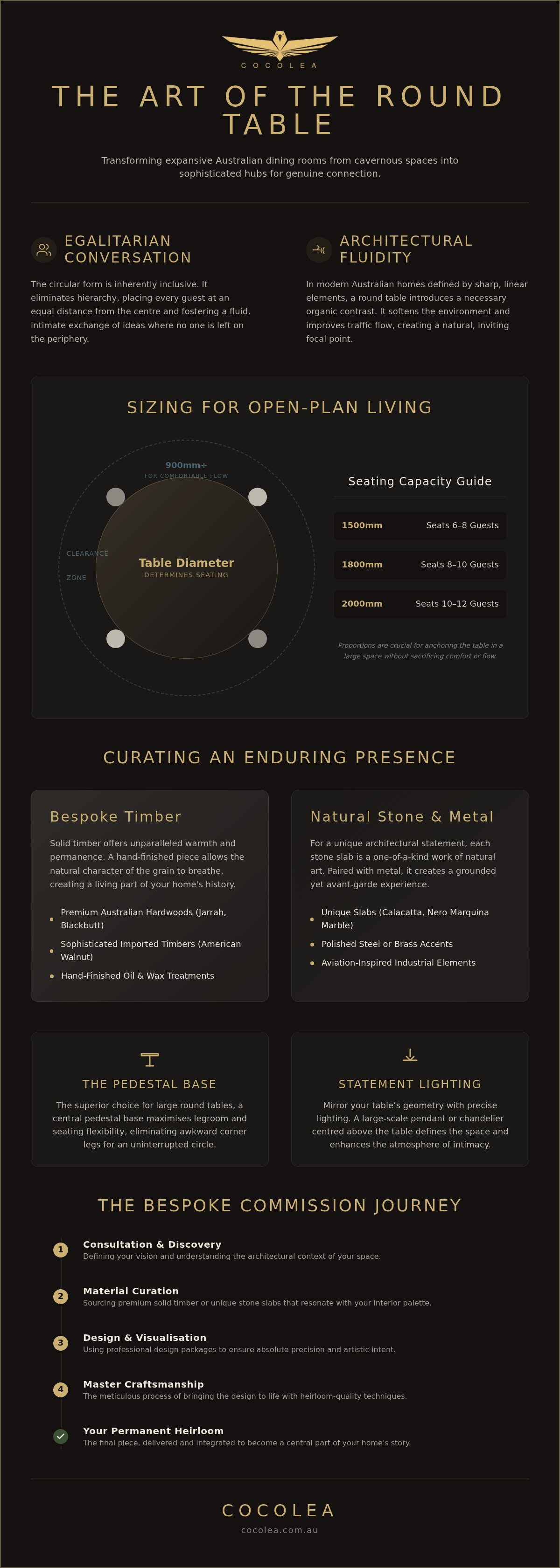
Traditional rectangular layouts often impose a subtle hierarchy, placing a singular "head" at the end of the axis. While the history and types of tables reveal a long-standing preference for the formal rectangle in state rooms, the contemporary luxury interior increasingly prioritises the egalitarian nature of the circle. The circular form is inherently inclusive. Everyone is positioned at an equal distance from the centre, facilitating a fluid exchange of ideas that feels both intimate and professional. It transforms the act of hosting from a structured event into a more organic, shared experience.
Fostering Social Connection
The "circle of conversation" is a psychological reality that rectangular formats struggle to replicate. In a large-scale round setting, guests benefit from direct eye contact with every other person at the table. This eliminates the "distance" issue common in cavernous dining rooms, where those at the far ends are effectively excluded from the main dialogue. It's an ideal configuration for those who value collaborative family discussions and high-stakes social hosting. The round dining table ensures that no guest is left on the periphery of the evening's narrative.
Architectural Fluidity in the Home
Modern Australian architecture frequently leans into sharp, structural linear elements. Floor-to-ceiling glass, polished concrete, and bespoke cabinetry often create a grid-like atmosphere. Introducing an organic, circular form provides a necessary aesthetic contrast. Beyond the visual appeal, round tables significantly improve traffic flow within multi-functional living areas. The absence of sharp corners allows for a more natural movement through the space. The table becomes a soft focal point that draws the eye inward, grounding the room without obstructing the journey between the kitchen and the lounge.
To see how these principles of luxury and comfort can be extended into the adjacent lounge area, you can learn more about ReModern Living and their expertise in contemporary European furniture curation.
Selecting Materials for an Enduring Presence
The soul of a round dining table resides in its material integrity. In a luxury interior, the tactile experience of a surface is just as vital as its visual impact. Mass-market retailers often rely on "marble-look" laminates or thin veneers that lack the gravitas required for a high-end home. True luxury demands materials that possess an enduring presence; substances that don't merely age, but patina beautifully over decades of use. Choosing the right medium requires a deep understanding of how grain, texture, and finish interact with the light and architecture of your specific environment.
Bespoke Timber Selection
Solid timber remains the pinnacle of warmth and structural permanence. When commissioning a piece, the distinction between premium Australian hardwoods and exotic imports is paramount. Species like Jarrah or Blackbutt offer incredible density and a uniquely local character, while American Walnut provides a deep, sophisticated grain that anchors a room. The defining factor is often the finish. While factory-sprayed lacquers create a plastic-like barrier, bespoke oil or wax treatments penetrate the wood. This hand-finished approach highlights the natural character of the grain and allows the timber to breathe, ensuring it remains a living part of your home's history.
Stone and Metal Accents
For those seeking a more architectural statement, natural stone slabs offer unparalleled uniqueness. No two cuts of Calacatta or Nero Marquina marble are identical; each tabletop becomes a one-of-a-kind work of natural art. Curation is essential here. You must select a slab that complements the tonal palette of your flooring and cabinetry. To avoid the clinical feel sometimes associated with stone, consider integrating industrial or aviation-inspired elements. Polished steel or brass accents can be utilised in the base or as a subtle inlay to provide a modern, sharp edge. This interplay between the cool elegance of stone and the industrial strength of metal creates a multi-sensory dining experience that feels both grounded and avant-garde.
Longevity is the ultimate luxury. By prioritising authentic materials and expert craftsmanship, you ensure your furniture transcends fleeting trends. If you're ready to move beyond the generic, exploring bespoke dining tables allows for a level of material consultation that guarantees your piece will serve as a permanent heirloom. Every choice, from the specific timber grain to the professional sealing of a marble slab, should be made with artistic intent and technical precision.
Sizing and Proportions for Australian Open-Plan Living
Precision in sizing is what distinguishes a cramped dining corner from a grand architectural statement. In the context of a luxury Australian home, the dimensions of a round dining table must be balanced against both the room's scale and the intended social dynamic. While mass-market guides offer generic measurements, a bespoke interior requires a more nuanced approach. You must account for the physical footprint of the piece alongside the "negative space" required for guests and service staff to move with ease.
Measuring for Capacity
The diameter of your table dictates the atmosphere of your gatherings. A 120cm table provides an intimate setting for four guests, while a 150cm diameter is the standard for a comfortable six-seat arrangement. For those who frequently host larger parties, a 180cm or larger round dining table accommodates eight or more guests with ease. It's important to recognise that as the diameter increases, the table occupies a significantly larger footprint than a rectangular equivalent of the same capacity. This is because the circular form expands equally in all directions, requiring a spacious, square-proportioned zone to feel truly anchored.
- 120cm: Ideal for four guests; perfect for breakfast nooks or smaller apartments.
- 150cm: The luxury standard for six; balances intimacy with personal space.
- 180cm+: Grand scale for eight or more; requires a substantial architectural void to avoid feeling crowded.
Spatial Planning Principles
The "Golden Rule" of luxury spatial planning is the clearance zone. To ensure a "white-glove" experience where movement is never restricted, maintain a minimum of 90cm between the table edge and the nearest wall or piece of furniture. For a truly sophisticated flow, 120cm is the preferred professional standard. This allows guests to remain seated while others pass behind them without disruption. You must also consider the profile of your seating. Bespoke dining armchairs often feature wider frames and deeper profiles than standard chairs, which can reduce the total number of seats a table can comfortably accommodate.
Ergonomics play a vital role in the longevity of the dining experience. Beyond the diameter, calculating the ideal dining table height is essential for ensuring that the relationship between the seat, the tabletop, and the guest's posture is perfectly aligned. Finally, centre the table directly beneath a statement pendant or chandelier. This vertical alignment defines the dining zone within an open-plan living area, creating a visual anchor that draws the eye and establishes the table as the heart of the home.
Designing the Space: From Pedestals to Statement Lighting
The structural integrity of a round dining table is often defined by its base. While four-legged designs are traditional, the pedestal base is the superior choice for luxury interiors. It serves a dual purpose; providing an architectural focal point and maximising functional comfort. By centralising the support, you eliminate the physical barrier of corner legs. This allows guests to sit anywhere around the perimeter without obstruction. Such flexibility is essential for high-end hosting where seating numbers may fluctuate and comfort is non-negotiable.
Stability is a critical consideration for large-scale commissions. A solid timber or natural stone top requires a base that can support significant weight without compromising the silhouette. A sculptural pedestal, whether crafted from hand-forged metal or solid wood, acts as a piece of art in its own right. It grounds the piece and provides a sense of permanence that matches the gravitas of the materials used. This central anchor allows the tabletop to appear almost as if it is floating, adding a layer of sophisticated lightness to the room.
The Pedestal vs. Leg Debate
The pedestal advantage extends beyond mere aesthetics. In a bespoke setting, the base is an opportunity for design refinement. A central column allows for maximum legroom and ensures that chairs can be tucked in fully, maintaining a clean look when the table is not in use. For heavy marble or oversized timber tops, a wide-flanged pedestal provides the necessary structural foundation. It prevents the tipping risks associated with narrower bases, ensuring your investment remains a safe and stable centrepiece for decades.
Curating the Surroundings
Lighting is the most effective tool for defining the dining zone. To create a cohesive aesthetic, choose a statement pendant or chandelier that mirrors the table's geometry. A circular light fixture hung at the correct height creates an intimate "pool" of light. This draws guests into the centre of the room and reinforces the egalitarian nature of the circular form. Aim for a height that allows for clear sightlines across the table while still feeling like a protective canopy over the conversation.
Rug selection requires a more nuanced approach. While a circular rug might seem the obvious choice, a large rectangular rug often provides a more stable visual anchor within an open-plan living area. The key is ensuring the rug is large enough that all chair legs remain on the surface even when guests are seated. This maintains the polished look of a curated space and prevents the furniture from feeling "floated" in the room.
Integrating your table into a broader bespoke furniture plan ensures every element of the room works in harmony. From the choice of dining chairs that complement the curve to the sideboards that frame the area, every detail must be considered with artistic intent. To begin your journey toward a truly refined interior, explore our collection of bespoke dining tables and discover how a custom-made centrepiece can transform your home.
The Bespoke Commission: Crafting Your Heirloom Table
A bespoke commission is an act of co-creation. It moves beyond the transactional nature of off-the-shelf furniture, instead positioning the client as a collaborative partner in the realisation of a one-of-a-kind centrepiece. When you invest in a round dining table of this calibre, you aren't simply purchasing a product; you're engaging in a structured, expert-led journey that ensures every millimetre of the final piece aligns with your lifestyle and architectural vision. This process is designed to eliminate the uncertainty often associated with high-value custom projects.
For large-scale commissions, the Foundation Interior Design Package is an essential starting point. This service provides the professional oversight required to transition from a conceptual idea to a fully realised physical space. It ensures that the table's diameter, material weight, and base design are perfectly calibrated to the room's existing proportions. By treating the project as a holistic design exercise rather than a singular purchase, we guarantee that the table serves as a permanent, functional anchor rather than an afterthought.
The Design Refinement Process
The path to a perfect commission is paved with precision. During the design refinement phase, you'll collaborate with seasoned experts to tailor every finish to your specific requirements. Material sampling is a critical component of this journey. It allows you to see and feel the specific timber grains or stone slabs before production begins, ensuring the tactile reality matches your aesthetic desires. This level of curation ensures the piece doesn't just sit in the room; it belongs there, reflecting the unique character of your home.
Delivery and Implementation
The final implementation of a heavy, bespoke item requires more than just a standard delivery service. Our white-glove installation provides the peace of mind that your investment is handled with the same care used during its manufacture. This is particularly vital for oversized stone or solid timber tables that require specialised equipment and professional assembly to ensure structural integrity. Meticulous placement is the final step in the journey, ensuring the table is perfectly centred under lighting and aligned with the room's traffic flow for an effortless hosting experience.
Investing in a custom piece is a commitment to longevity. Unlike mass-market alternatives that degrade over time, a bespoke round dining table is built to endure for generations. With professional installation and ongoing care for the natural materials, your table will develop a unique character that tells the story of your home. It ceases to be mere furniture and becomes an heirloom; a permanent witness to the most meaningful moments of your life.
Refining the Heart of Your Luxury Interior
Choosing a round dining table is a deliberate act of prioritising intimacy and architectural balance. You've discovered how circular geometry fosters egalitarian conversation and how bespoke materials like hand-finished timber or natural stone provide an enduring presence. By focusing on the nuances of pedestal bases and professional spatial planning, you can ensure your dining area remains a functional, sophisticated hub for hosting. This approach transforms a simple room into a curated environment defined by artistic intent and permanence.
Cocolea offers an expert-led, end-to-end service to bring these visions to life. From initial design refinement to white-glove installation anywhere in Australia, our team specialises in the craftsmanship of timber, industrial, and aviation-inspired furniture. We're committed to delivering pieces that don't just fill a space but elevate it for generations to come. Your journey toward a more connected and refined home begins with a single, well-considered commission.
Explore the Cocolea Collection of Bespoke Dining Tables and discover the impact of true craftsmanship in your home.
Frequently Asked Questions
How many people can comfortably sit at a 150cm round dining table?
A 150cm diameter table comfortably accommodates six guests. While smaller tables might feel cramped, this scale provides ample personal space for formal place settings and bespoke armchairs. It's the ideal size for a standard luxury dining room, balancing intimacy with a sense of grand presence. Always account for the width of your specific seating to maintain a fluid flow around the perimeter.
Is a pedestal base better than four legs for a round table?
A pedestal base is almost always superior to a four-legged configuration for a round dining table. By centralising the support, you eliminate the physical barrier of corner legs, allowing guests to sit anywhere without obstruction. This maximises legroom and provides a more sculptural, architectural aesthetic. For heavy stone or solid timber tops, a well-engineered pedestal ensures the necessary structural stability while maintaining a refined silhouette.
What is the best rug shape for a round dining table in a large room?
A large rectangular rug is often the superior choice for anchoring a circular table in an expansive room. While a round rug is a literal match, a rectangle provides a more stable visual foundation within open-plan Australian homes. Ensure the rug is large enough so all chair legs remain on the surface when guests are seated. This defines the dining zone clearly without the furniture feeling ungrounded.
Can a round dining table work in a small, narrow dining room?
Round tables work exceptionally well in narrow spaces because their lack of sharp corners improves traffic flow. The organic shape allows for more natural movement through a room that might otherwise feel obstructed by a rectangular piece. For smaller environments, choosing a pedestal base is essential. It reduces the visual bulk of the furniture and makes the floor area appear more spacious while still providing a sophisticated centrepiece.
How do I choose the right lighting for a circular dining area?
Select a lighting fixture that mirrors the table's geometry to create a cohesive aesthetic. A singular, large-scale circular pendant or a tiered chandelier hung directly over the centre defines the dining zone with precision. Ensure the light is positioned at a height that creates an intimate canopy over the guests without obstructing sightlines. This vertical alignment reinforces the table as the heart of the home's social narrative.
What are the benefits of commissioning a bespoke dining table over buying retail?
Commissioning a bespoke piece offers complete control over material curation and technical dimensions. Unlike retail options that often rely on veneers or standard sizes, a custom round dining table is tailored to your specific architectural environment. You can hand-select timber grains or stone slabs that complement your home's palette. This ensures the final piece isn't just a functional item but a one-of-a-kind heirloom built for longevity.
How much space should I leave between the table and the wall for chairs?
Maintain a minimum clearance of 90cm between the table edge and the nearest wall. For a truly professional, high-end experience, 120cm is the preferred standard. This specific distance allows guests to pull out their chairs and remain seated comfortably while others pass behind them without disruption. It prevents the dining zone from feeling congested during multi-course service or large-scale formal events.
Are round tables suitable for formal entertaining?
Round tables are exceptionally well-suited for formal entertaining because they eliminate the traditional "head of the table" hierarchy. Every guest is positioned at an equal distance from the centre, which encourages a more inclusive and egalitarian social dynamic. This configuration facilitates direct eye contact between all parties, making it the preferred choice for collaborative discussions and sophisticated dinner parties where fluid conversation is the primary focus.